
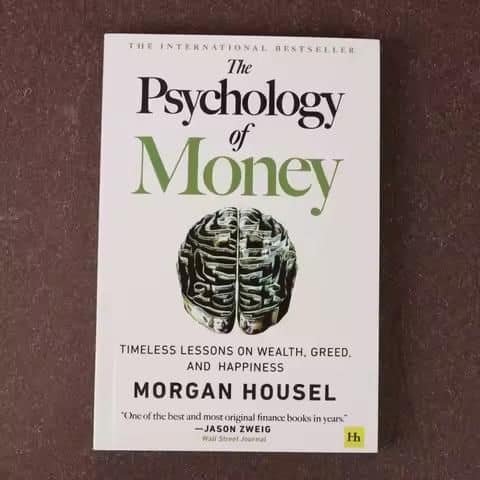

This detailed The Psychology of Money book summary examines the core lessons from The Psychology of Money by Morgan Housel, a book that redefines how we think about wealth. Instead of teaching formulas or stock-picking tactics, Housel focuses on something far more powerful: human behavior.
The book is structured as nineteen interconnected essays. Each one explores a different dimension of how people think about money, why they behave irrationally, and how long-term wealth is actually built. What makes the book profound is not complexity, but clarity. It argues that financial success is not primarily about intelligence. It is about temperament.
Below is a detailed breakdown of the core lessons and themes.
No One Is Crazy: Your Personal History Shapes Your Financial Decisions
One of the book’s foundational arguments is that people make financial decisions based on their lived experiences.
Someone who grew up during hyperinflation will fear rising prices more intensely than someone raised in economic stability. Someone whose parents lost everything in a recession will approach investing differently from someone who only experienced bull markets. According to Housel, these experiences form our financial worldview.
This insight removes the arrogance often present in financial debates. What looks irrational from the outside is often deeply rational within someone’s personal history. Understanding this makes you more empathetic—and more aware of your own blind spots.
Luck and Risk: The Invisible Forces Behind Wealth
Housel emphasizes that every financial outcome is influenced by a mix of skill, luck and risk. We often attribute success entirely to intelligence and failure entirely to incompetence. But reality is far more complex.
He illustrates this through historical business successes and collapses, showing how timing, macroeconomic forces and chance events shaped outcomes. The lesson is not to dismiss skill, but to remain humble. Recognizing luck prevents overconfidence. Recognizing risk prevents complacency.
This is a core idea in any serious The Psychology of Money book summary: wealth is never purely earned or purely deserved.
Never Enough: The Danger of Relentless Greed
One of the most sobering sections of the book examines how the inability to define “enough” destroys fortunes.
Housel reflects on wealthy individuals who risked everything for slightly more wealth, only to lose it all. The problem was not poverty. It was comparison. It was ego. It was the desire to outrun others.
The lesson is deeply psychological. When you cannot define enough, you take risks you do not need to take. And unnecessary risk is the enemy of compounding. The book argues that contentment is not complacency—it is protection.
The Power of Compounding: Time Is the Real Multiplier
Compounding is often discussed in finance, but rarely appreciated emotionally.
Housel uses the example of long-term investors who accumulated massive wealth not because they earned the highest annual returns, but because they stayed invested for decades. Time amplifies even modest returns into extraordinary outcomes.
The key insight is patience. Compounding demands consistency. Interruptions—whether caused by panic, ego or overconfidence—destroy its magic. The longer your time horizon, the more forgiving the market becomes.
This chapter reframes investing from a sprint into a lifelong process.
Getting Wealthy vs Staying Wealthy
The book draws a sharp distinction between accumulating wealth and preserving it.
Getting wealthy often requires boldness, risk-taking and optimism. Staying wealthy requires humility, frugality and caution. It requires accepting that survival matters more than outperformance.
Housel argues that many investors focus too heavily on growth strategies while neglecting defensive thinking. The ability to avoid ruin is the foundation of long-term success. Staying in the game is more important than winning every round.
Freedom: The Highest Return on Investment
Perhaps the most emotionally resonant chapter explores what money is truly for.
According to Housel, the highest form of wealth is control over your time. Money’s greatest value is autonomy. It allows you to decide what to do, when to do it and with whom to do it.
This perspective shifts financial goals away from status symbols and toward independence. Luxury fades. Freedom endures.
In this The Psychology of Money book summary, this lesson stands out because it redefines success entirely.
Wealth Is What You Don’t See
Modern culture equates spending with success. But Housel dismantles that illusion.
Wealth is not the car you drive or the house you post online. Wealth is the assets you have not yet converted into consumption. It is money saved, invested and quietly compounding.
Spending signals income. Saving signals discipline.
The chapter challenges the urge to perform wealth publicly and instead encourages private financial strength.
Save for Optionality, Not Just Goals
Traditional financial advice emphasizes saving with specific objectives. Housel broadens this idea.
Saving creates flexibility. It provides room for unexpected opportunities and unexpected crises. The world is unpredictable. Careers change. Markets shift. Emergencies arise.
Savings buy time and breathing room. They reduce stress. They expand choice. In uncertain systems, optionality is power.
Room for Error: Build Margin Into Your Financial Life
One of the most practical lessons in the book is the importance of margin of safety.
Housel argues that smart investors assume they can be wrong. They build buffers into their finances. They avoid over-leverage. They leave room for mistakes.
This approach acknowledges that uncertainty is permanent. Instead of trying to eliminate risk, you prepare for it. Room for error ensures that a single bad event does not destroy everything you have built.
You Will Change: Plan for Future Versions of Yourself
Another subtle but profound lesson is that long-term plans must account for personal evolution.
Your ambitions, risk tolerance and values will shift over time. A financial plan that feels right today may feel restrictive in ten years. Housel encourages adaptability rather than rigid commitment.
Understanding that you will change prevents regret and financial overreach.
Nothing Is Free: Volatility Is the Price of Admission
Investors often seek high returns without discomfort. Housel reminds readers that volatility is not a malfunction—it is the cost of growth.
Market downturns are normal. They are not evidence that the system is broken. Viewing volatility as a fee rather than a failure makes it easier to stay invested.
This psychological reframing helps investors remain disciplined during turbulence.
The Seduction of Pessimism and the Power of Narrative
Housel observes that pessimism often sounds smarter than optimism. Negative forecasts feel more convincing because they are urgent and dramatic.
Yet history shows steady progress over long periods. Humans also create narratives to explain randomness. We prefer neat stories to complex truths.
Recognizing this tendency allows investors to resist emotional headlines and focus on long-term fundamentals.
Final Reflections on The Psychology of Money
This comprehensive The Psychology of Money book summary reveals that the book’s strength lies in its behavioral insights. It is not a technical manual. It is a psychological mirror.
It teaches that wealth is built quietly, preserved humbly and sustained through discipline. It reminds us that financial freedom is not about appearing rich but about being secure.
Above all, it argues that mastering money begins with mastering yourself.
And that lesson may be more valuable than any investment strategy.