
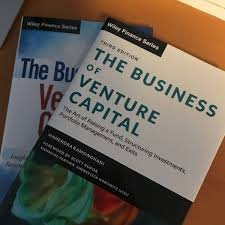

If you’ve ever wondered how venture capital really works — not the Twitter version, not the glamorized Silicon Valley version — but the actual mechanics behind how funds are built, raised, structured, and scaled…
The Business of Venture Capital delivers the blueprint. Written by Mahendra Ramsinghani, this book isn’t motivational fluff. It’s a masterclass in how the venture capital industry actually operates — from fund formation to exits.
If you’re searching for:
-
Venture capital explained
-
How venture capital funds work
-
How to become a venture capitalist
-
Venture capital fund structure
-
VC investment strategy
This book is one of the most practical guides you’ll find.
Let’s break it down.
Venture Capital Is a Fund Business First — Not an Investing Hobby
One of the most misunderstood parts of venture capital is this:VCs don’t just invest. They run funds.
And a fund is a financial product with structure, constraints, and incentives. A typical venture capital fund has:
-
A 10-year lifespan
-
A fixed pool of capital
-
Limited Partners (LPs) who expect returns
-
General Partners (GPs) who manage investments
-
A “2 and 20” compensation structure (2% management fee, 20% carry)
Here’s why this matters:
If you truly want venture capital explained, you must understand incentives. Because VCs are operating inside a time-bound structure:
-
They must deploy capital within a few years.
-
They must reserve capital for follow-on investments.
-
They must generate liquidity before the fund expires.
That’s why VCs push for scale. That’s why they care about exit potential. That’s why “unicorn hunting” isn’t hype, it’s structural necessity.
The fund model forces VCs to chase asymmetric outcomes. This is not casual angel investing. It’s institutional capital under pressure.
The Power Law Governs Everything
Ramsinghani reinforces one brutal truth: Venture capital returns follow a power law distribution.
In plain English:
-
Most startups fail.
-
A few break even.
-
One or two generate the majority of returns.
That means a single investment can return the entire fund. This shapes behavior in profound ways.
Because of the power law:
-
VCs look for outliers, not “good businesses.”
-
They care about market size more than current revenue.
-
They tolerate high failure rates.
-
They reserve capital aggressively for breakout winners.
If you’ve ever wondered why VCs pass on “solid” businesses, this is why.
A company that can 2x or 3x isn’t attractive enough. A company must have the potential to return 10x, 50x, even 100x.
Understanding the power law is central to understanding how venture capital works.
Fundraising Is a Signaling Game
Raising a venture fund is not just about performance. It’s about narrative, credibility, and access.
Ramsinghani explains that LPs evaluate:
-
Track record (even informal track record)
-
Network strength
-
Sector expertise
-
Access to proprietary deal flow
-
Differentiation strategy
For emerging managers, this is especially difficult. Unlike founders who pitch a product, fund managers are pitching:
-
Their judgment
-
Their network
-
Their future decision-making
This is why relationships dominate venture capital. It’s a small ecosystem. Reputation compounds.
Trust compounds. If you’re searching “how to become a venture capitalist,” this book makes one thing clear:
You don’t start with money. You start with access and trust.
Deal Flow Is the Real Moat
Ramsinghani makes a subtle but powerful point: The best deals rarely come from cold inbound pitches. They come from:
-
Founders referred by trusted operators
-
Angel networks
-
Repeat founders
-
Strong ecosystems
-
Deep sector immersion
In venture capital, access is everything. Two firms can have equal capital. The one with better deal flow wins. This explains why top-tier firms consistently outperform.They see better opportunities earlier. If venture capital is a competitive sport, deal flow is positioning.
Portfolio Construction Is Strategic, Not Random
Many beginners think venture capital is just “make a lot of bets.” But Ramsinghani explains that portfolio construction is deliberate. A fund manager must decide:
-
How many companies to invest in
-
Check sizes
-
Reserve ratios for follow-ons
-
Stage focus (seed vs Series A vs growth)
-
Sector concentration
If you over-diversify, you dilute returns. If you under-diversify, risk explodes. The book explains how thoughtful capital allocation increases the odds of catching the power-law winner.
This is one of the strongest sections for readers who want to understand VC portfolio strategy in practice.
Governance and Board Influence Matter More Than Most People Realize
After investing, the work doesn’t stop. VCs often:
-
Take board seats
-
Influence hiring
-
Guide strategy
-
Help raise future rounds
-
Prepare companies for exits
But here’s the nuance Ramsinghani emphasizes: The best VCs add value without suffocating founders.
Governance must balance:
-
Oversight
-
Support
-
Independence
-
Long-term vision
Poor governance can destroy value. Good governance compounds it. This is where venture capital shifts from finance to leadership.
Exit Strategy Starts on Day One
A venture fund cannot return capital without exits. That means IPOs, acquisitions, or secondary sales.
Ramsinghani stresses something critical: You don’t think about exits in year nine. You think about them when you invest. Is the market large enough? Are acquirers active? Is the company structurally scalable? Does it fit public market expectations?
The end shapes the beginning. That’s institutional investing discipline.
What Makes This Book So Valuable?
Unlike surface-level startup books, this one gives you structural understanding. It explains:
-
The venture capital business model
-
Fund economics
-
Incentive alignment
-
Portfolio math
-
Institutional constraints
If you truly want venture capital explained — not glamorized — this is one of the clearest guides available.
Final Review
The Business of Venture Capital is not flashy.
It’s methodical. It’s structured. It’s practical. And that’s exactly why it’s powerful. For:
-
Aspiring VCs
-
Angel investors
-
Fund managers
-
Founders wanting to understand investor psychology
-
Finance students exploring private markets
This book delivers clarity. It doesn’t sell the dream. It explains the machine. And once you understand the machine, venture capital starts to make sense.