
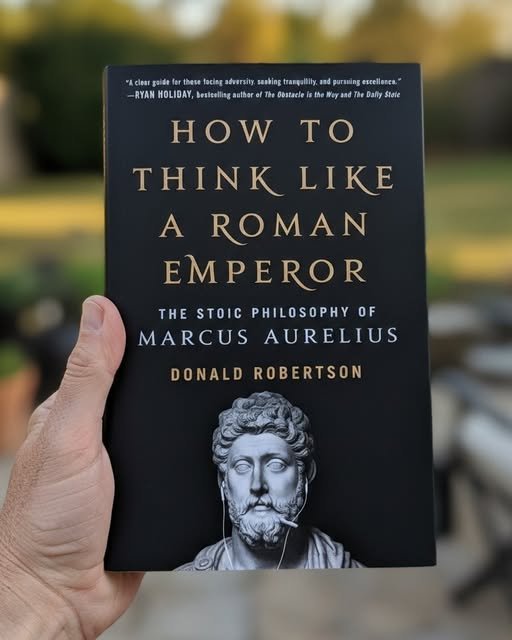

Reading Think Like a Roman Emperor by Donald Robertson feels like stepping into the mind of Marcus Aurelius himself, but with a modern guide showing you how to apply his wisdom to everyday challenges.
This isn’t just a history book. It’s a practical manual for resilience, emotional control, and personal growth, all rooted in Stoicism. Robertson combines the biography of Marcus Aurelius with actionable psychological strategies, making ancient wisdom feel alive today.
The Story Behind the Book
The book starts with Marcus Aurelius’ early life: a Roman emperor burdened by immense responsibility, surrounded by political intrigue, and facing personal tragedies. Yet, he remained calm, rational, and principled.
Robertson walks us through Marcus’ journey — from a disciplined student to the leader of Rome — showing how Stoic philosophy shaped his decisions, emotions, and leadership style.
But the brilliance of this book lies in Robertson translating Stoicism into actionable lessons for modern readers. You’re not just reading history; you’re learning how to manage stress, make rational decisions, and live with purpose.
Key Lessons from Think Like a Roman Emperor
Control What You Can, Accept What You Cannot
Marcus Aurelius’ Stoic mindset is simple: focus on what’s within your control — your thoughts, judgments, and actions. Robertson emphasizes that frustration and anxiety come from trying to control the uncontrollable. This is a lesson in mental freedom.
Embrace Rationality Over Emotion
One of Marcus’ strengths was his ability to respond to challenges with reason instead of impulsive emotion. Robertson links this to modern cognitive-behavioral therapy (CBT), teaching readers how to reframe negative thoughts and prevent emotional overreactions.
Practice Daily Reflection
Marcus kept a personal journal — now famously known as Meditations.
Robertson encourages readers to reflect daily on decisions, actions, and intentions. This builds self-awareness and emotional resilience.
Prepare for Adversity
Marcus Aurelius knew life would bring suffering. Instead of avoiding it, he mentally prepared for hardship. Lesson for today: anticipate challenges and plan responses instead of reacting impulsively.
The Importance of Virtue and Character
The Stoics believed that living virtuously — courage, wisdom, justice, and temperance — was the path to happiness. Robertson frames these virtues as practical tools: making ethical choices, managing anger, and staying grounded amid chaos.
Detach from External Validation
Marcus Aurelius didn’t seek approval from the crowd; he measured himself against reason and virtue.
Robertson shows how modern readers can stop obsessing over social approval and focus on what truly matters.
Turn Obstacles Into Opportunities
One of the book’s most inspiring takeaways: obstacles can become opportunities for growth.
As Marcus said: “The impediment to action advances action. What stands in the way becomes the way.” Robertson emphasizes applying this mindset to career setbacks, personal struggles, and stress.
Stoicism Meets Modern Psychology
Robertson doesn’t just teach philosophy. He blends it with modern psychology, especially CBT, to show practical steps for managing anxiety, anger, and self-doubt.This makes Stoicism tangible and actionable — not just abstract wisdom from 2,000 years ago.
Final Verdict
Think Like a Roman Emperor is a compelling mix of biography, philosophy, and psychology.
Donald Robertson doesn’t just tell you what Marcus Aurelius thought, he shows you how to think like him, even if your “empire” is your workplace, family, or personal ambitions.
It’s practical, inspiring, and a must-read for anyone looking to develop mental strength and purpose in life.