
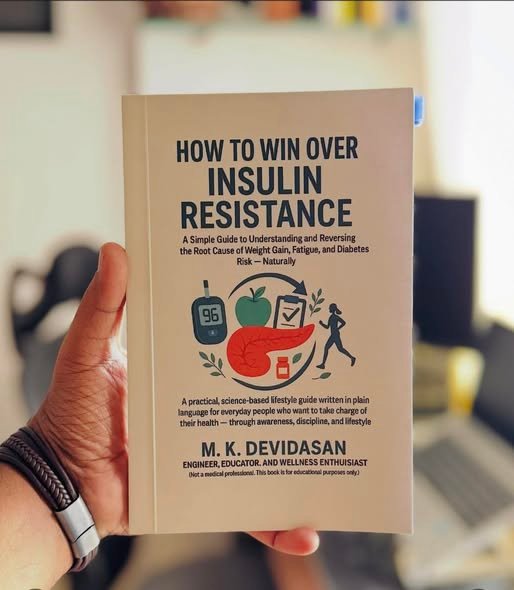

How to Win Over Insulin Resistance focuses on explaining insulin resistance in simple terms and showing how everyday lifestyle patterns contribute to — and can help reverse — the condition. The book’s strength lies in connecting metabolism, diet, and habits in a way that feels practical and understandable rather than technical.
Below are the core lessons that run through the book.
1. Insulin Resistance Is the Root of Many Modern Diseases
One of the book’s central messages is that insulin resistance is not just about diabetes. Devidasan explains that it underlies many chronic conditions, including obesity, metabolic syndrome, heart disease, and hormonal imbalances.
Rather than treating symptoms individually, the book emphasizes addressing insulin resistance as the core metabolic issue.
2. Insulin Resistance Develops Slowly and Silently
The author highlights that insulin resistance often develops long before blood sugar levels become abnormal. Many people feel “fine” while their cells gradually stop responding effectively to insulin.
This makes early awareness crucial. The book encourages readers to understand warning signs and risk factors rather than waiting for a diagnosis.
3. Diet Plays a Central Role in Insulin Sensitivity
A major lesson in the book is that frequent spikes in blood sugar — often driven by refined carbohydrates and highly processed foods — strain the body’s insulin response over time.
Devidasan explains how modern eating patterns differ from how the human body evolved to process food, contributing to metabolic dysfunction. The emphasis is on food quality, balance, and timing, rather than extreme restriction.
4. Excess Insulin Promotes Fat Storage
The book explains the biological role of insulin as a storage hormone. When insulin levels remain high for long periods, the body is more likely to store fat and less able to burn it.
This insight reframes weight gain as a hormonal and metabolic issue, not simply a lack of willpower.
5. Exercise Improves Insulin Sensitivity Beyond Weight Loss
Another key lesson is that physical activity improves insulin sensitivity even without dramatic weight changes. The book explains how muscle activity helps cells absorb glucose more efficiently, reducing insulin demand.
Movement is presented not as punishment for eating, but as a metabolic tool that supports overall health.
6. Stress and Sleep Strongly Affect Insulin Response
Devidasan emphasizes that insulin resistance is not caused by diet alone. Chronic stress and poor sleep disrupt hormonal balance, increasing insulin resistance even in people who eat well.
The book reinforces the idea that metabolic health is deeply connected to lifestyle patterns, not isolated behaviors.
7. Insulin Resistance Can Be Improved
A hopeful takeaway from the book is that insulin resistance is not permanent. With consistent lifestyle changes, the body can regain insulin sensitivity over time.
This message is empowering: metabolic damage is not a life sentence, and improvement is possible at many stages.
8. Sustainable Change Matters More Than Quick Fixes
The author cautions against short-term solutions and fad approaches. Instead, the book promotes gradual, sustainable changes that can be maintained long-term.
Winning over insulin resistance, according to Devidasan, is about understanding your body and working with it, not fighting it.
Overall Message of the Book
How to Win Over Insulin Resistance reframes metabolic health as a daily practice rather than a medical emergency. By explaining how insulin works, why resistance develops, and how lifestyle choices influence metabolism, the book empowers readers to take informed control of their health.
Its core philosophy is simple: when insulin works well, the entire body works better.