
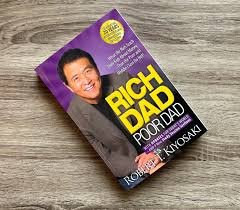

Rich Dad Poor Dad by Robert Kiyosaki is one of the most influential personal finance books ever written, not because it teaches people how to get rich quickly, but because it challenges how they think about money, work, and financial security.
Rather than presenting formulas or investment strategies upfront, the book is structured around Kiyosaki’s childhood experiences with two father figures — his biological father (the “poor dad”) and his best friend’s father (the “rich dad”). Through their opposing beliefs about money, the book explores why some people work hard all their lives yet remain financially insecure, while others build lasting wealth.
How the Story Begins: Two Dads, Two Mindsets
The book opens with Robert as a young boy growing up in Hawaii, observing the stark contrast between the two most influential men in his life. His poor dad is highly educated, holds a steady government job, and believes deeply in formal education, job security, and climbing the corporate ladder. Despite his intelligence, he constantly struggles financially.
His rich dad, on the other hand, has little formal education but owns businesses and investments. He believes that schools do not teach people how money really works and that financial independence comes from owning assets, not earning paychecks.
From the start, Kiyosaki makes it clear that the book is not about choosing who is morally right, but about understanding which mindset produces financial freedom.
The Core Lesson: The Rich Don’t Work for Money
One of the book’s most important ideas is that the rich don’t work for money — money works for them. Kiyosaki explains that most people spend their lives trapped in what he calls the “rat race”: earning money, paying bills, taking on debt, and repeating the cycle indefinitely.
Through lessons taught by his rich dad, Kiyosaki learns that fear — of not having money — drives people to accept job security over financial education. Instead of learning how to build assets, they become dependent on salaries.
The book argues that escaping the rat race requires learning how money moves, not just how to earn it.
Assets vs Liabilities: The Defining Difference
At the heart of Rich Dad Poor Dad is a simple but controversial definition:
-
Assets put money in your pocket
-
Liabilities take money out of your pocket
Kiyosaki explains that many people mistakenly believe their house, car, or lifestyle purchases are assets, when in reality they are liabilities that drain income through expenses, loans, and maintenance.
The rich focus on acquiring income-generating assets — businesses, real estate, stocks, and intellectual property — while the poor and middle class focus on earning income and increasing expenses.
This distinction becomes the foundation of the book’s wealth philosophy.
Why Financial Education Matters More Than Salary
Another recurring idea in the book is that financial education is more important than academic education when it comes to money. Kiyosaki does not dismiss schooling entirely, but he argues that schools train people to be employees, not investors or business owners.
Through stories from his youth, he shows how rich dad encouraged learning about accounting, taxes, cash flow, and investing — topics most people only encounter when it’s too late.
The message is clear: without financial education, high income alone will not lead to wealth.
Taxes, Corporations, and the Advantage of the Wealthy
Kiyosaki also explains how corporations and tax laws are structured to benefit asset owners rather than employees. Rich dad teaches him that the wealthy often earn money through businesses and investments, then pay expenses before taxes, while employees earn income, get taxed, and then pay expenses.
This section of the book reframes how readers think about taxes, entrepreneurship, and the legal structures used to preserve wealth.
Working to Learn, Not Just to Earn
One of the more unconventional lessons in Rich Dad Poor Dad is the idea that people should sometimes choose jobs for the skills they provide, not just the salary. Rich dad advises Robert to learn sales, communication, leadership, and financial management — even if it means earning less initially.
The book emphasizes that diversified skills create opportunities and independence, while narrow specialization can limit long-term growth.
Overcoming Fear, Cynicism, and Comfort
As the book progresses, Kiyosaki addresses the internal obstacles that prevent people from building wealth: fear of failure, fear of loss, cynicism, laziness disguised as busyness, and the comfort of routine.
He argues that emotional discipline is just as important as financial knowledge. Those who learn to manage fear and think long-term are more likely to take calculated risks that lead to growth.
How the Book Ends: A Call to Think Differently
Rich Dad Poor Dad does not end with a step-by-step investment guide. Instead, it closes with a challenge: change how you think about money before trying to change how much you earn.
Kiyosaki encourages readers to seek financial literacy, question conventional advice, and take responsibility for their financial futures. The book’s power lies not in telling readers exactly what to do, but in forcing them to rethink what they believe about money, work, and success.
Final Summary Verdict
Rich Dad Poor Dad is a mindset-shifting book that reframes wealth as a product of education, habits, and perspective rather than income alone. Through simple stories and bold claims, Robert Kiyosaki exposes the invisible rules that govern money, and why those who learn them early gain a lifelong advantage.
Whether readers agree with every idea or not, the book succeeds in its core mission: making people question the traditional path to financial security.