
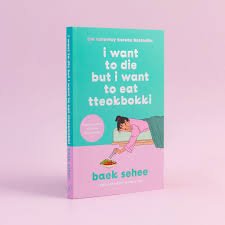

If you’ve ever laughed at your own sadness, postponed your problems with snacks, or thought “I’m not okay… but I’m also not not okay”, this book is basically looking you dead in the eye and nodding.
Baek Se-hee’s I Want to Die but I Want to Eat Tteokbokki is not a dramatic cry for help. It’s a calm, honest, sometimes awkward conversation about living with low-level depression, anxiety, and emotional confusion—served with warm bowls of Korean rice cakes and dry humour.
The book is structured as a series of therapy conversations between the author and her psychiatrist. That’s the magic. There’s no “perfect recovery arc,” no motivational yelling. Just small truths unfolding slowly, like realizing why you react the way you do, or why happiness feels suspicious when it shows up.
Why this book pulls you in
-
It’s deeply relatable without being overwhelming
-
The tone is casual, almost diary-like—like eavesdropping on a very honest therapy session
-
It validates feelings many people don’t know how to name
-
It’s short, readable, and emotionally gentle
You don’t read this book to be fixed.
You read it to feel understood.
Lessons I Want to Die but I Want to Eat Tteokbokki Teaches
You don’t need to be “broken” to deserve help
One of the most powerful ideas in the book is that Baek Se-hee isn’t in constant crisis. She has a job. Friends. Functioning days. And yet, something feels off.
The book gently dismantles the idea that mental health support is only for people at rock bottom. Through her therapy sessions, we see that persistent emptiness, emotional confusion, or low-level sadness are valid reasons to seek help. You don’t need a dramatic reason. Feeling “not quite okay” is reason enough.
This lesson alone is freeing, especially for readers who constantly tell themselves, “Others have it worse, so I shouldn’t complain.”
Emotional numbness is still an emotion
Baek Se-hee often describes feeling flat, indifferent, or detached, not deeply sad, not happy either. Just… blank.
The book treats this numbness with seriousness, showing that a lack of strong emotion is not the absence of a problem. In fact, numbness can be the body’s way of protecting itself after long periods of emotional strain.
This is comforting for readers who don’t cry often, don’t feel dramatic sadness, but still feel disconnected from life. The book says: this counts too.
Small joys don’t invalidate deep struggles
The title itself is the perfect example of this lesson. Wanting to eat tteokbokki—a warm, comforting food—exists right alongside thoughts of emotional exhaustion.
The book reminds us that enjoying small pleasures doesn’t mean your struggles aren’t real. You can laugh, crave comfort food, enjoy a good day, and still be dealing with something heavy internally.
This challenges the false idea that suffering must look a certain way. Life is messy. Emotions overlap. And that’s normal.
Therapy is not about instant answers, it’s about better questions
If you’re expecting therapy to be full of dramatic breakthroughs, this book gently corrects that expectation.
Most sessions in the book involve:
-
Repeating the same thoughts
-
Examining reactions
-
Noticing patterns
-
Sitting in uncertainty
And that’s the point.
The psychiatrist doesn’t “fix” Baek Se-hee. Instead, she helps her become curious about herself instead of judgmental. Over time, that curiosity creates understanding, and understanding creates room to breathe.
It shows therapy as a slow process of untangling, not a magical solution.
Your feelings don’t need permission to exist
A recurring theme in the book is how often Baek Se-hee questions whether her emotions are “reasonable,” “serious enough,” or “valid.”
Through conversation after conversation, the book teaches that feelings don’t need justification. They don’t need to be compared to others’ pain. They don’t need to be logical to be real.
This lesson is especially powerful for readers who intellectualize their emotions or constantly downplay them. The book encourages a simple but radical shift: feel first, judge later—or not at all.
Healing looks boring, and that’s okay
There are no cinematic recovery moments here. No sudden happiness. No clean ending.
Instead, healing looks like:
-
Slightly better awareness
-
Fewer self-blaming thoughts
-
Being kinder to yourself on bad days
-
Noticing when something triggers you
The book reframes healing as maintenance, not transformation. And that honesty makes it far more believable—and comforting.
Being gentle with yourself is a skill you can learn
Perhaps the quietest but most lasting lesson: self-compassion is not automatic. It’s learned.
Baek Se-hee doesn’t suddenly become confident or fearless. What changes is how she talks to herself. How she pauses instead of spiraling. How she allows herself to exist without constant self-criticism.
The book suggests that you don’t need to love yourself all the time. Sometimes, not hating yourself is progress enough.
Final thoughts
This book doesn’t scream. It whispers, and somehow that makes it louder.
I Want to Die but I Want to Eat Tteokbokki reminds us that even on days when life feels dull, confusing, or emotionally cluttered, there’s still room for warmth, food, conversation, and small reasons to stay present. Sometimes, that’s enough to keep going.